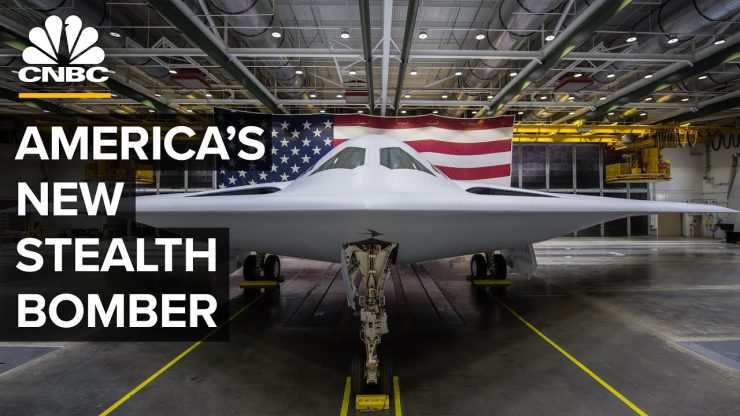


“It will be able to penetrate further into enemy territory and put Warheads on Foreheads anywhere the President wants”
🚨 BREAKING: U.S. Air Force Chief of Staff Gen. David W. Allvin talks about the NEW replacement for the famous B-2 bomber, the B-21.
“It will be able to penetrate further into enemy territory and put Warheads on Foreheads anywhere the President wants” pic.twitter.com/agDVoiqrd7
— The Patriot Oasis™ (@ThePatriotOasis) July 2, 2025
The B-21 Raider And The Future Of The Air Force Bomber Force
What makes the B–21 different? The B-2 was mechanical. The B–21 is digital. It can receive mission data mid-air. Its systems can be upgraded like an app. And it’s built for environments where every radar is hunting you.
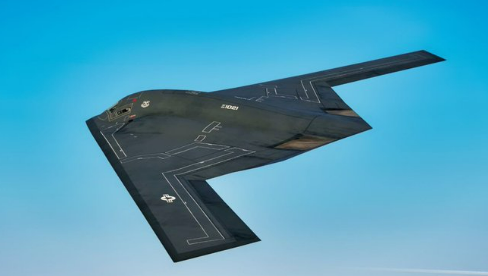
The B-21 Raider is a next-generation stealth bomber being developed by Northrop Grumman for the U.S. Air Force. Below is a summary of key information in bullet point format, based on available data:
- Purpose and Role:
- Designed as a long-range, highly survivable, penetrating strike stealth bomber capable of delivering both conventional and nuclear munitions.
- Intended to replace the B-1 Lancer and B-2 Spirit by 2040, and potentially the B-52 Stratofortress later.
- Will form the backbone of the future U.S. Air Force bomber fleet alongside upgraded B-52s.
- Part of the Pentagon’s nuclear triad modernization, ensuring credible deterrence in complex global security environments.
- Designed as a long-range, highly survivable, penetrating strike stealth bomber capable of delivering both conventional and nuclear munitions.
- Development and Production:
- Part of the Long Range Strike Bomber (LRS-B) program, initiated in 2011, with Northrop Grumman awarded the development contract in October 2015.
- Built at Air Force Plant 42 in Palmdale, California, the same facility used for B-2 production.
- First aircraft unveiled on December 2, 2022, with the first flight on November 10, 2023.
- As of September 2024, three airworthy B-21s are involved in flight testing at Edwards Air Force Base, California, with three more in ground testing.
- Low-rate initial production (LRIP) has begun, with nearly 40 aircraft reportedly in production as of April 2025.
- Uses advanced manufacturing techniques, including augmented reality tools and AI, reducing assembly hours by nearly a third in some areas.
- Part of the Long Range Strike Bomber (LRS-B) program, initiated in 2011, with Northrop Grumman awarded the development contract in October 2015.
- Design and Capabilities:
- Features a flying wing design, similar to the B-2 but smaller, with enhanced stealth technology, including smoother radar-absorbent coatings and recessed air intakes.
- Described as the world’s first sixth-generation aircraft, with advanced networking, open architecture for easy upgrades, and integration with uncrewed escorts and offboard sensors.
- Capable of carrying AGM-181 Long Range Stand-Off (LRSO) missiles, JDAM bombs, and nuclear payloads like B61-11, B61-12, and B61-13.
- Ceiling of 50,000 feet and a payload capacity of approximately 20,000 pounds in its weapons bay.
- Designed for reduced maintenance compared to the B-2, with more durable stealth coatings to lower operational costs.
- Features a flying wing design, similar to the B-2 but smaller, with enhanced stealth technology, including smoother radar-absorbent coatings and recessed air intakes.
- Cost and Budget:
- Estimated unit cost of $692 million in 2019 dollars (approximately $793 million adjusted for inflation).
- Total program cost projected at $203 billion for 100 aircraft, including $25.1 billion for development, $64 billion for production, and $114 billion for 30 years of operation.
- Northrop Grumman reported losses exceeding $2 billion, including a $477 million loss in Q1 2025 due to higher manufacturing and material costs.
- FY2026 budget allocates $4.74 billion for B-21 development and production to accelerate output.
- Estimated unit cost of $692 million in 2019 dollars (approximately $793 million adjusted for inflation).
- Production Goals and Challenges:
- The Air Force plans to acquire at least 100 B-21s, with some estimates suggesting a need for 145–288 aircraft to counter threats from Russia and China.
- Current production rate targets 10 aircraft per year, but calls for a second facility aim to double this to 20 per year to meet strategic needs by the 2030s.
- Challenges include high initial costs, supply chain issues, and macroeconomic factors like inflation affecting material prices.
- The Air Force plans to acquire at least 100 B-21s, with some estimates suggesting a need for 145–288 aircraft to counter threats from Russia and China.
- Operational Deployment:
- Expected to reach initial operational capability (IOC) by 2027, though timelines may shift.
- Ellsworth Air Force Base, South Dakota, will host the first operational and training units, with future bases at Whiteman AFB, Missouri, and Dyess AFB, Texas.
- Maintenance and sustainment coordinated by Tinker Air Force Base, Oklahoma, with testing led by Edwards AFB.
- Expected to reach initial operational capability (IOC) by 2027, though timelines may shift.
- Strategic Significance:
- Designed to penetrate advanced air defenses, delivering precision strikes globally, and serving as a battle manager and intelligence platform.
- Positioned to counter China’s Xi’an H-20 and Russia’s PAK DA, both lagging in development compared to the B-21.
- Enhances U.S. deterrence in a multipolar world, addressing threats from China, Russia, Iran, and North Korea.
- Designed to penetrate advanced air defenses, delivering precision strikes globally, and serving as a battle manager and intelligence platform.
Want more information on the B-21?
Ice (Raids) in July: PATRIOTS” TOP 10 – Watch MAGA


- Be prepared for anything, including lockdowns with your own Emergency Med kit – see Wellness Emergency Kit (includes Ivermectin and other essential drugs, guide book, much more… peace of mind for you and your family) 🛑 – Dr. McCullough’s company! – Sponsor
- How can you move your 401K to Gold penalty free? Get the answer and more with Goldco’s exclusive Gold IRA Beginner’s Guide. Click here now! – Goldco – These folks can help with Physical gold as well – Mal