Authorities in the Democratic Republic of the Congo are struggling to contain the country’s largest Ebola outbreak. Late detection, conflict and strained health services are all contributing factors to a mounting death toll. Rahul Radhakrishnan reports
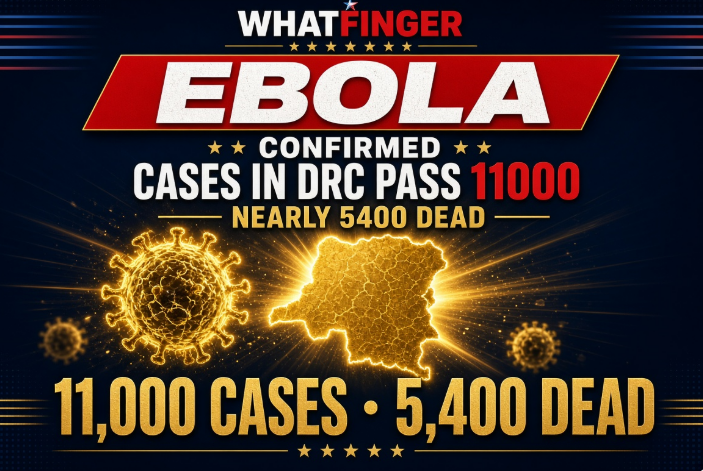
Confirmed Ebola cases in the Democratic Republic of the Congo have crossed 11,000, with 5,387 dead, according to the country’s National Institute of Public Health figures released this week. That is the worst outbreak in Congo’s history and the second-largest on record anywhere, trailing only the 2014-2016 West Africa epidemic that infected more than 28,600 people and killed more than 11,000.
The virus is the rare Bundibugyo strain. It kills roughly half the people it infects. No approved vaccine or treatment exists for it. The World Health Organization has cleared clinical trials of two candidate vaccines; results are not expected until early 2027. Eight of Congo’s 26 provinces have cases. Most of the deaths are still happening outside treatment centers. Delayed detection, ongoing fighting, and a health system that was already threadbare have let the virus outrun the response. Youths burned an Ebola treatment center in Lolwa, Ituri, this month. Health workers have been attacked. Salaries for checkpoint staff are months late in some areas.
Cases have already shown up in Uganda, Kenya, and Nigeria. That is the widest geographic reach of any Ebola outbreak on the continent.
Congo’s Ebola cases have crossed 11,000 in another development that shows the severity of the outbreak. The Bundibugyo virus responsible for this outbreak has no known vaccine or treatment and has spread to eight of the country’s 26 provinces. https://t.co/UqpoODGbm5
— The Associated Press (@AP) November 11, 2026
Why Africa Keeps Paying the Price
The virus lives in African forests. Fruit bats and other wildlife are the most likely natural reservoirs. People who hunt bushmeat, clear land for farms, or simply live next to the animals give the virus repeated chances to jump. Congo sits in the middle of that ecological zone and has recorded 17 outbreaks—more than any other country. Deforestation, population growth, and the bushmeat trade keep the contact points open.
Once it reaches people, the virus thrives on what is already broken. Eastern Congo is a conflict zone. Armed groups operate freely. Roads are poor. Hospitals lack beds, protective gear, and staff. Contact tracing fails when people move or when communities distrust outsiders. Burial practices that involve washing and touching the body of the dead spread the virus further. Many patients never reach a treatment center at all. In past West African outbreaks the same pattern held: weak systems, recent wars, and low trust turned a containable spillover into a multi-year epidemic.
Africa has the reservoir, the contact, and the institutional gaps. Other continents do not.
What Are the Odds It Reaches Europe or Elsewhere?
An infected person can travel. Medical evacuations have already brought confirmed or exposed workers to the UK, Switzerland, Germany, the Netherlands, and France. Limited imported cases reached Kenya and Nigeria. The European Centre for Disease Prevention and Control still rates the chance of infection for people living in the EU as very low, and the chance of sustained secondary transmission as very low. The risk for travelers to affected areas is low. Screening of all returning passengers is not considered useful based on the 2014 experience.
⚠️Ebola (BDBV) on track to be worst Ebola outbreak ever.
11042 cases, 5387 deaths, these numbers are not slowing down.
— Dr Richard Hirschson (@richardhirschs1) November 11, 2026
Ebola does not spread through the air like flu or COVID. It requires direct contact with blood, vomit, or other bodily fluids. People are usually not contagious until they are visibly sick. That gives time for isolation. Western hospitals have isolation rooms, personal protective equipment, and the ability to trace every contact. In 2014 a handful of cases reached the United States and Europe. Two nurses in Dallas became infected while treating a Liberian patient; both recovered after the response locked down the chain. A Spanish nurse was infected caring for an evacuated patient and also recovered. No sustained outbreaks occurred outside Africa.
Historical data from 1976 through May 2026 show only 28 confirmed Ebola cases exported outside Africa. Almost all were either medical evacuations or latent cases that developed symptoms after arrival. Excluding the evacuations, the crude risk has been roughly 0.17 cases outside Africa per 1,000 reported cases inside Africa. The pattern has held.
Africa suffers because the virus is native there and the health systems cannot contain it. Europe and the United States can isolate a patient, gown the staff, and run the contacts. That is the practical difference. The current outbreak is still expanding inside Congo and neighboring countries. Outside those areas the numbers remain small and the containment tools remain strong.
Whatfinger News continues to track the outbreak and related health developments. For practical preparedness notes on isolation and contact control, see the Survival Command resources on dedicatedissues.com.
— The Whatfinger News Team: Sgt K and Sgt J, with Grok on edits and graphics